

Rebuilding trust, influence, and effectiveness when your leadership is part of the challenge.

When results stall, your habits may be the bottleneck. A premium, reflective, practical executive pathway with clear tools, no shame. Designed for busy leaders, modular, self-directed learning and tools.

What Happens When Your Leadership Becomes Part of the Problem?

Sometimes the most difficult leadership challenges are not about strategy, structure, or systems.

They are about us.

At some point in a leader’s journey, feedback becomes harder to ignore:

• You are too involved in the details
• Your team hesitates to speak up
• Decisions stall or keep circling back to you
• Trust feels inconsistent or strained

These moments are uncomfortable.
They can also be defining.

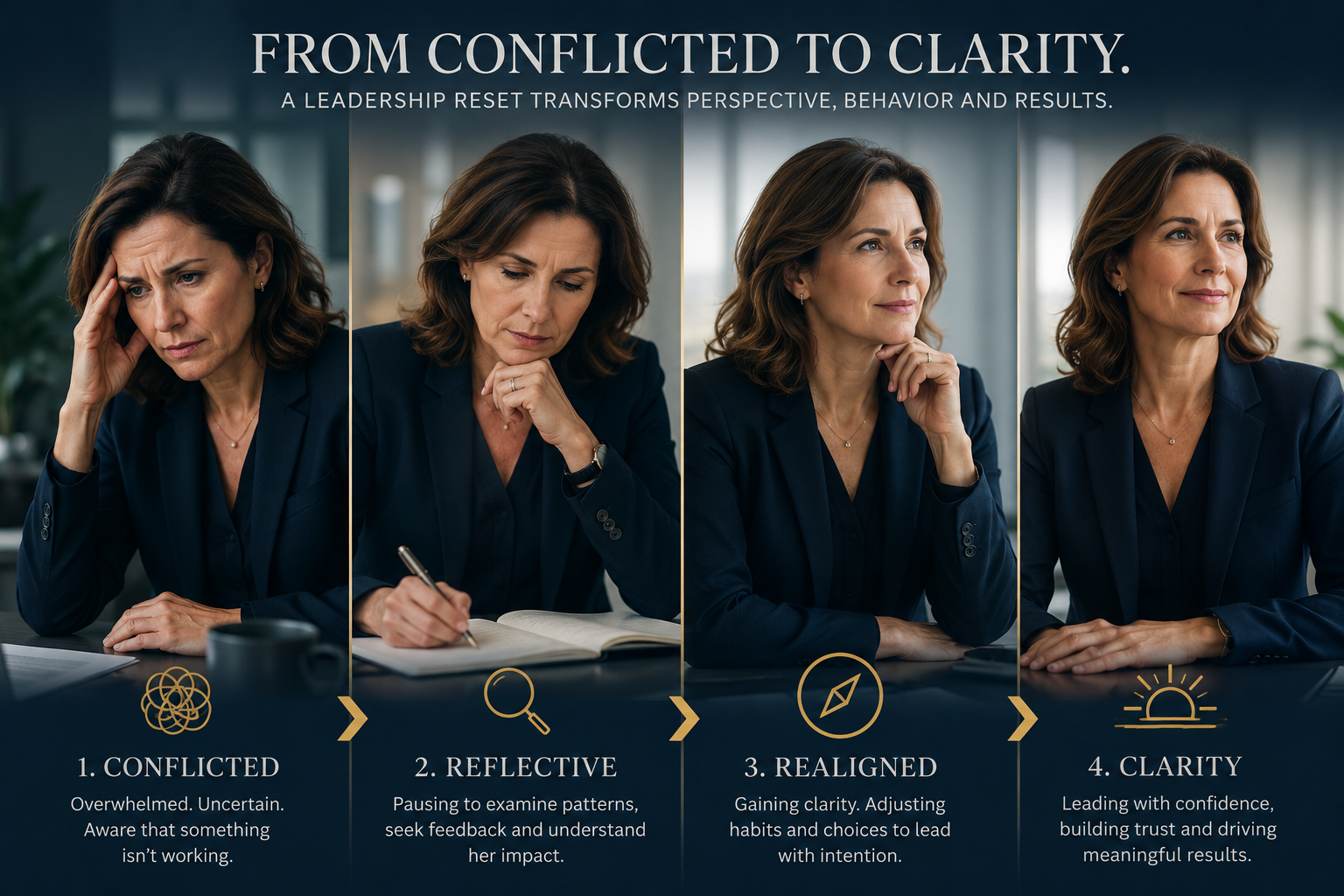
Leadership Reset is designed for leaders who are ready to pause, reflect, and take ownership of how their leadership may be shaping outcomes.

Not with blame.
With clarity and support.

Am I really part of the problem? How can I know?

The most difficult leadership constraints are often the ones leaders no longer recognize in themselves. There may be long-standing leadership patterns limiting your effectiveness, influence, and organizational health.

How many of these apply to your situation?

1. You Become Overly Involved

You regularly step into decisions, conversations, or details your team should own.

What feels like support to you may feel like micromanagement to others.

2. Your Team Stops Bringing You Problems Early

People filter information, delay difficult conversations, or avoid bringing concerns forward.

Often this signals reduced psychological safety or fear of your reaction.

3. Decisions Keep Circling Back to You

Your team struggles to move forward without your approval, input, or direction.

Over time, this creates dependency instead of leadership capacity.

4. You Prioritize Control Over Clarity

You solve urgency by tightening control rather than increasing communication, trust, or alignment. This may improve short-term efficiency while weakening long-term engagement.

5. Feedback Feels Threatening Instead of Useful

You instinctively defend, explain, or justify rather than pause and examine the feedback objectively. This often limits growth and self-awareness.

6. People Become Careful Around You

Conversations shift when you enter the room. People become quieter, more cautious, or overly agreeable.

This is often one of the clearest indicators that your leadership presence may be influencing team dynamics negatively.

7. You Believe the Problem Is Always Everyone Else

You consistently feel frustrated that:

• nobody takes ownership
• nobody thinks strategically
• nobody performs at your level

While sometimes true, recurring patterns may also indicate leadership behaviors that are contributing to the issue.

8. Your High-performers Don't Stick Around

Connected to #7, this one is very telling, because your high-potential and high-performers realize they are marketable and simply....leave. Or worse, they become disengaged and stay.

At some point, your board, your customers, and your senior leaders are going to recognize that EVERYONE else, couldn't possible be the only problem.

What this experience is about:

";
When results matter, your go-to leadership habits can start creating friction without you noticing. This pathway exists to help you see what you are reinforcing, recalibrate with intent, and lead with more trust and impact.
;

Why this pathway exists.

";
  • Strong leaders can become the constraint when pace, certainty, or control starts limiting ownership and candor.

  • You will use structured reflection to spot patterns, test new choices, and recalibrate how you lead under pressure.

  • You will improve trust, grow influence, and strengthen team effectiveness through clear, practical shifts you can apply immediately.

;

Leadership Reset helps you...

";

• Recognize patterns in your leadership behavior
• Understand how those patterns impact others
• Rebuild trust and strengthen relationships
• Shift from control to clarity and influence
• Lead with greater awareness and effectiveness

This is where Strategic Intelligence becomes personal.
;

Learn: Understand the patterns that may be limiting your effectiveness

These courses help you step back and evaluate how you are thinking, diagnosing problems, and interpreting results, areas where leaders often unknowingly become the constraint.

Executive Level Thinking Doesn't Just Happen...

....it requires practice. 

Start Here:
How to Define a Problem and Identify Its Root Cause
Many leaders move quickly to solve issues without fully understanding them.

This course helps you slow down, clarify the real problem, and determine whether your leadership approach is addressing the right issue.
Empty space, drag to resize
Then, continue with Evaluating Your Results When Problem-Solving
Leaders often assess outcomes without examining their own role in producing them.

This course helps you evaluate results more objectively and identify patterns in your leadership impact.

What You'll Begin to Notice

As you move through these courses, you may begin to see:

• Where you step in too quickly
• Where you hold on to decisions too tightly
• Where your intentions and impact do not align
• Where your leadership may be shaping the very challenges you are trying to solve

This awareness is the first step toward meaningful change.

Practice

Examine how your leadership shows up under pressure

Awareness does not come from information alone. It comes from reflection. Use the Strategic Intelligence tools to explore your leadership patterns in real time. This experience is designed to provide the skills in a practical approach.

Apply

Translate awareness into meaningful leadership change

Insight without action does not create change. These tools help you shift your leadership in practical, visible ways. 

Application Tools:

What's The Connection?

Leadership Reset is not separate from Strategic Intelligence. It is where the framework becomes personal.

You begin to apply:

• Clear Thinking – recognizing the real issue, including your own role
• Connected Thinking – understanding how your behavior impacts others
• Strategic Thinking – choosing more effective approaches
• Executive Thinking – making disciplined, intentional shifts

This is how leaders move from awareness to transformation.

Every leader has patterns. The question is whether you are willing to examine yours before they continue shaping trust, communication, and results.

Choose Your Next Move

A

Ignore The Pattern
Continue leading the same way and hope the outcomes improve. This may feel easier in the short term, but unchecked patterns often become more costly over time.

 B

Begin the Self-Paced Reset
Use this page to pause, reflect, and begin identifying where your leadership may be creating friction.

C

Go Deeper Inside the Studio
Use the courses, tools, Strategic Intelligence Decks, and application resources to strengthen your self-awareness and leadership discipline.

D

Engage Pam as Your Coach
Work directly with Pam to examine what is happening, interpret feedback, rebuild trust, and make intentional changes in how you lead.